
For reasons unknown to mankind, the internet loves complicating things. Using jargon to describe things that could otherwise be described easily. Maybe it makes people on the internet look smart, maybe it makes the viewer look stupid, but if you try even minutely, you’d be able to understand just about anything in the world. Because it’s usually really that basic.
One such thing is neuroplasticity.
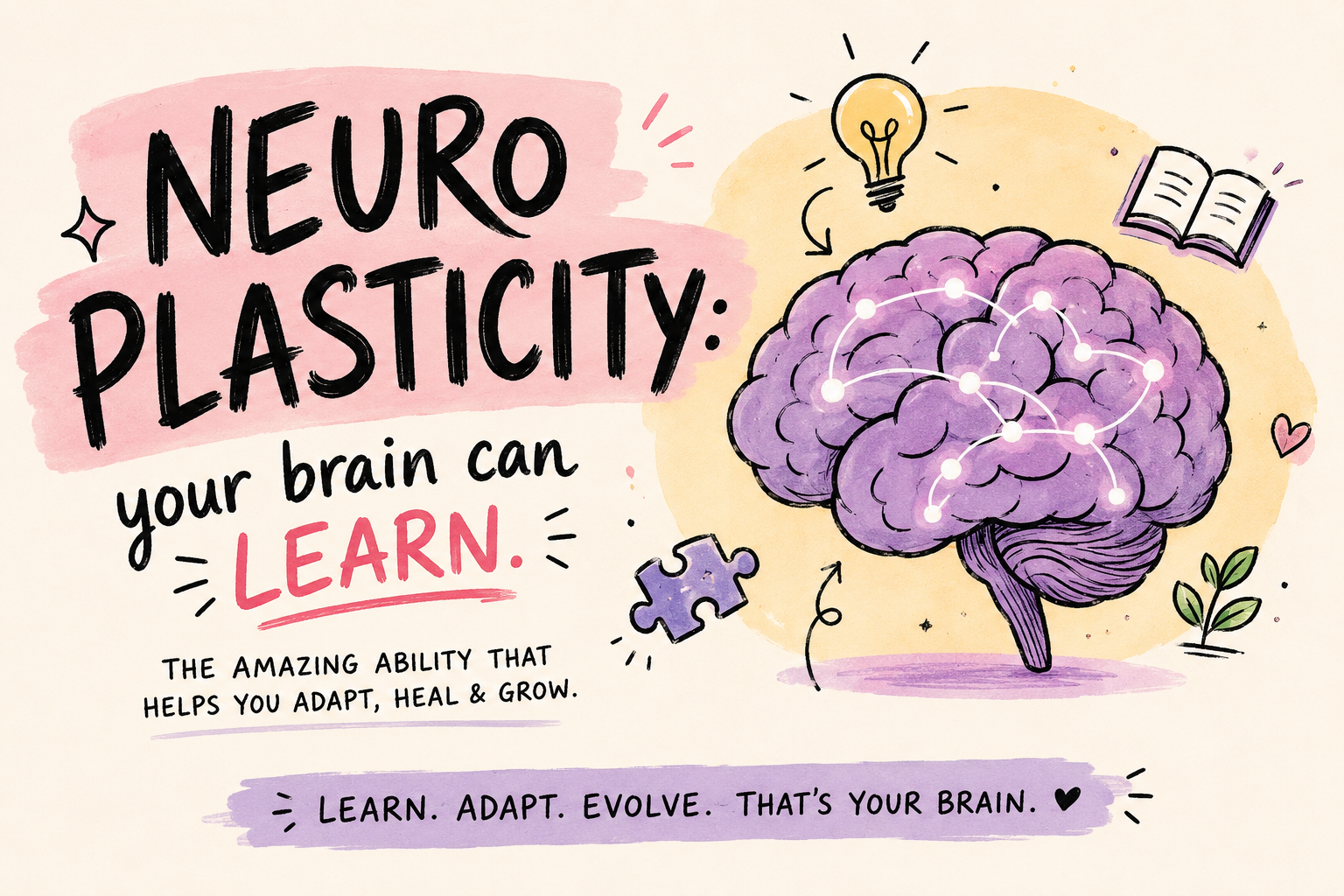
For years, my understanding of the word in layman’s language was simple — our brain can learn.
Literally, that’s it.
And that is actually just it. In the simplest of the simplest words — your brain can learn.
Actually, it is a little more complex than that — your brain can physically change shape, form new neural pathways, adapt to change, etc — but it all boils down to one thing — learning. If you do something long enough, you learn. Even a five year old knows this.
And while learning could mean anything right from learning how to play a guitar to learning how to self-cure your body, the point remains the same. Your brain is amazing, whether you use it or not. It has immense potential, which only develops when you use it.
So How Does Neuroplasticity Work Exactly?
There’s more than one kind, wouldn’t ya know it. But again, it’s all interconnected. If you know one, the other one just follows.
Structural Plasticity
Your brain physically alters its architecture by branching out new connections (synapses) and strengthening pathways. If today you suddenly decide to learn how to speak Russian, and you stay consistent enough — your brain will begin building pathways that help you understand and eventually speak the language more naturally.
Functional Plasticity
Functions previously managed by damaged or unutilized areas of the brain can be shifted to healthy regions. Knew your vernacular language when you were a kid and somehow can’t speak it today? That’s because you stopped accessing that strange little area of your brain and it decided the information wasn’t important enough to keep easily accessible anymore.
Use-Dependent Plasticity
Brain pathways that you use frequently become stronger and more efficient, while pathways that are neglected weaken and are eventually pruned away. You don’t say. That’s why practice makes a man perfect.
Now it may seem like this functionality of the brain is for the psycho it girls that wanna know and be everything at once. While that’s true, this particular brainy phenomenon also helps normal, biting humans in various ways. Such as:
Real Life Examples Of Neuroplasticity
Stroke Or TBI Recovery
Following a traumatic injury or stroke, the brain can rewire healthy circuits to help a patient relearn speech, swallowing, or motor movements. That’s how patients like Rishabh Pant recover. That’s how anybody recovers.
Sensory Adaptation
If someone loses their sight, their brain may repurpose the visual processing cortex to heighten their hearing or touch. Blind people can navigate and interpret the world in astonishing ways without sight — because, neuroplasticity.
And while the people that give 30 minute lectures on the internet on the topic may not mention that you don’t need a PhD to understand it, it’s all very simple to understand if you think about it.
Today ya learnt something useful from the goddess of Shreyalogy. Tomorrow we go back to being dumb.

Leave a Reply