
Having gotten the whole “what is neuroplasticity, explain to me like I’m five” thing away (which by the way is my last article, you can read here) — it’s time to leverage all that five-year-old-level information into actual action.
So let’s recap for a bit first.
Your brain has tiny labourers called neurons. They communicate with each other through something called synapses — and every time you learn something new, repeat something often, or experience something significant, these little workers start renovating your brain’s wiring to accommodate it.
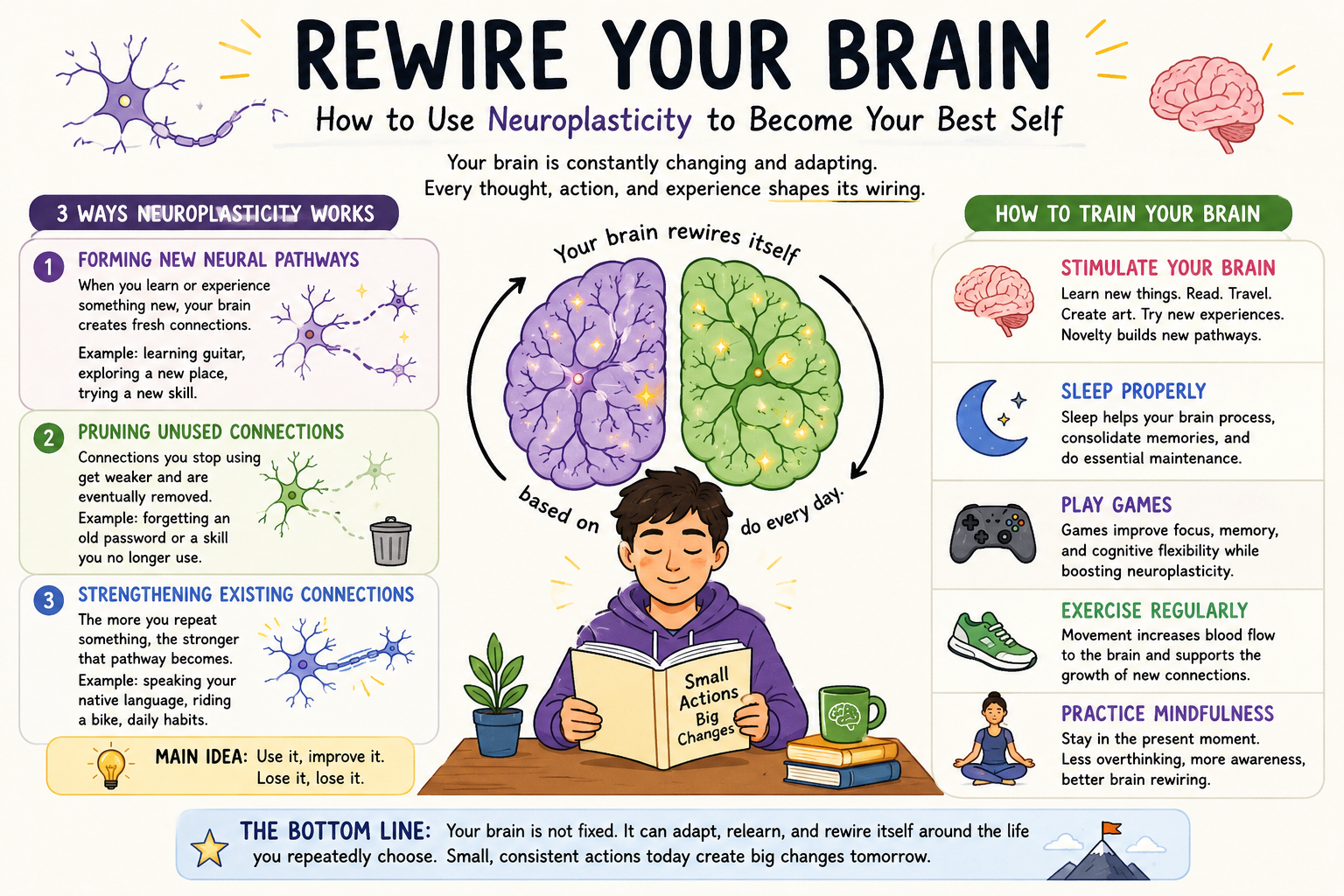
There are three main ways neuroplasticity works.
1. Forming New Neural Pathways
When you learn or experience something new, your brain creates fresh neural connections.
You’re learning how to play the guitar? Good for you — but guess who’s clocked in for overtime? Neuroplasticity.
2. Pruning Unused Connections
Your mom throwing away clothes you no longer wear? Honestly, she plagiarised that from the brain.
Your brain does the same thing. Connections you stop using slowly weaken and fade away.
3. Strengthening Existing Connections
You already know Hindi, and you speak it every day? Yeah, that pathway isn’t going anywhere anytime soon.
Because whatever you repeatedly practice, your brain decides is important enough to keep.
Now that we’ve established your brain is basically an overworked electrician constantly rewiring things behind the scenes, let’s get to the point of this entire piece:
How Do You Actually Train Your Brain To Upgrade Itself?
Turns out, the answer is annoyingly simple.
Stimulate Your Brain
Learn a new language. Pick up an instrument. Travel somewhere unfamiliar. Read more. Make art. Try new things in general.
Your brain loves novelty. Every unfamiliar activity forces it to build and strengthen new pathways.
Sleep Properly
This one hurts because it means the “I’ll sleep at 3 AM and heal emotionally later” lifestyle is not ideal.
Sleep is when your brain processes information, strengthens learning, and basically performs maintenance work. Without enough rest, neuroplasticity takes a hit.
Play Games
And suddenly spending hours on games sounds slightly less embarrassing.
Studies suggest games — board games, card games, puzzles, video games — can improve cognitive flexibility and help stimulate neuroplasticity.
Exercise Regularly
Movement helps the brain too, not just the body.
Regular exercise improves blood flow to the brain and supports the growth of new neural connections. Walking, dancing, swimming, cycling, strength training — your neurons genuinely do not care as long as you move.
Practice Mindfulness
Which is a very fancy way of saying:
“Please stop thinking about ten things at once.”
Mindfulness trains your brain to stay in the present moment instead of constantly spiralling into the past or future. Over time, this can positively reshape thought patterns and emotional responses.
And let’s be real for a second.
You and I both know we are probably not going to wake up tomorrow and suddenly become the kind of people who meditate at sunrise, drink green juice, learn Italian, and do yoga while journaling about personal growth.
But it’s still good to know this stuff.
Because anytime you decide to turn your life around — whether it’s becoming healthier, learning something new, breaking a bad habit, or rebuilding yourself after a rough phase — your brain is not stuck the way it is right now.
It can adapt.
It can relearn.
It can rewire itself around the life you repeatedly give it.
And honestly, that’s probably the most hopeful thing about being human.

Leave a Reply